


About Family Constellations
For over eight years we have been exploring the art of family constellations. Yet the challenge remains: how do you explain something that mostly speaks the language of perceptions and sensations?
The second part of our post looks at the impact of family constellations, what you should look out for, transgenerational trauma and epigenetics, as well as the evolution of family and organisational constellations. Read the first part.
If it leaves you with more questions than answers, there is only one thing to do: experience it personally.
How can family constellations support you?
The short answer is: more presence, more clarity, increased understanding and compassion for ourselves and the world around us.
One client told us:
“I gained courage and the will to choose to live a good life for myself”
Another pointed out:
“Life has become lighter and more joyful”
Constellations offer a new perspective on a situation. They help us move out of the story we have been telling ourselves, the story that keeps us trapped in a draining situation.
This can often be unsettling and a true wakening call. From this new perspective change is possible. You suddenly move free from a situation and take back the power to transform and retell the story in a way that is supportive instead of hampering. When we stop wanting to change the world around us, our children, our parents, our partners, we start taking back responsibility to focus and transform what we can. Which is ourselves.

A study from the Heidelberg university1 measured the effects of constellations two weeks and four months after a seminar. They tested the overall psychological status of participants, their new perceptions of the system they had investigated, e.g. the family system, as well as their capacity to apply the intentions they had stated during the constellation in their daily life. The results showed improvements in all three areas, both after two weeks and after four months.
The power of transformation
Each family is a system. Like any other biological system it seeks balance. When one element changes, the entire system responds, adapts and seeks a new equilibrium. How often do we hear the feedback:
“It’s incredible, I have changed my attitude and my family system is also transformed”
This is the power of constellations. The transformation you go through personally impacts and reverberates far beyond yourself. We are reminded of the well-known theory about one butterfly flapping its wings on one side of the planet causing a hurricane on the other side of the world.
Once we become aware of the deeper causes of our behaviours, we are free to choose a new path. When we choose an alternative option, then the system around adapts accordingly. And so, transformation moves beyond ourselves.
What’s specific about this method?
What does this mean?
To start with, rethink what freedom of choice means. We tend to see us as people with a free will choosing our own path. This might be partially true. Yet a constellation shows us a much more intricate reality.
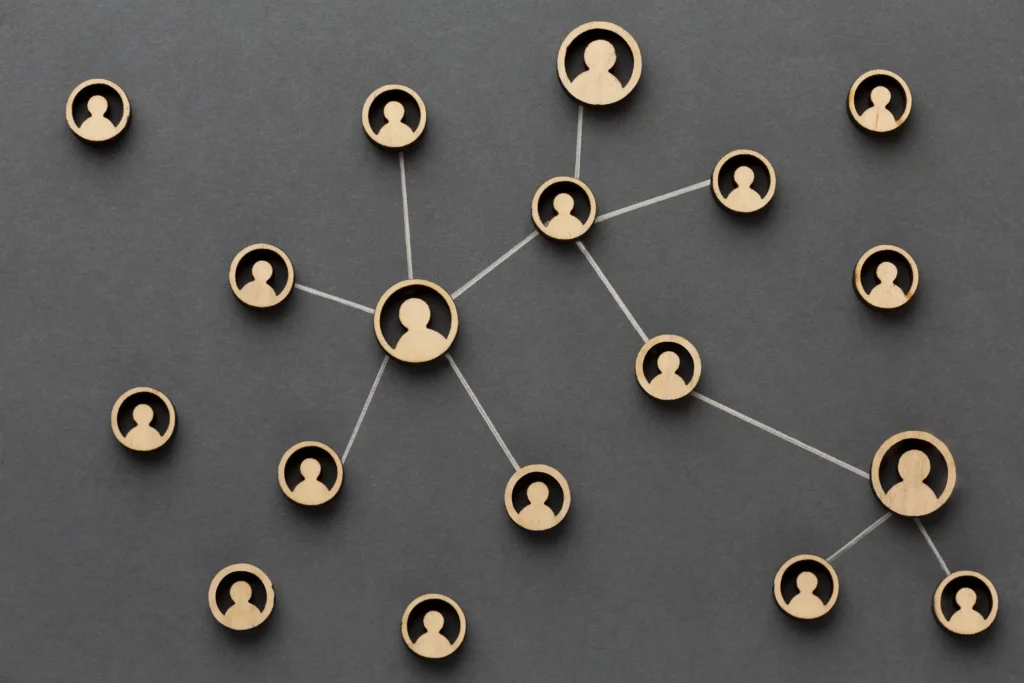
The people you choose to be with, the places you live in, the job you choose are not simply the results of a free, independent movement. They are conditioned by a huge amount of intertwined information you carry with you, more or less consciously.
This is a big eye opener. Suddenly the issue we want to investigate has roots not only in our personal experiences, but also in the life experiences of our family members (whether they are alive or dead, whether we have met them or not, whether we live in the same house with them or continents away), of our ancestors and the historical context they lived in.
Trans-generational trauma and epigenetics
“If it’s hysterical, it’s historical”
Thanks to current epigenetic studies we know that our genes carry not only information about the colour of our eyes or the gender we are born in but also a wealth of emotions. In studies2 on rats, scientists have observed how fear moves down from one generation to another. In cases of important traumas, as far as four generations back. This was explored not only on rats but also on humans. Research looked at ways in which trauma travelled through generations and caused Post Traumatic Stress Disorder Symptoms in future generations.32
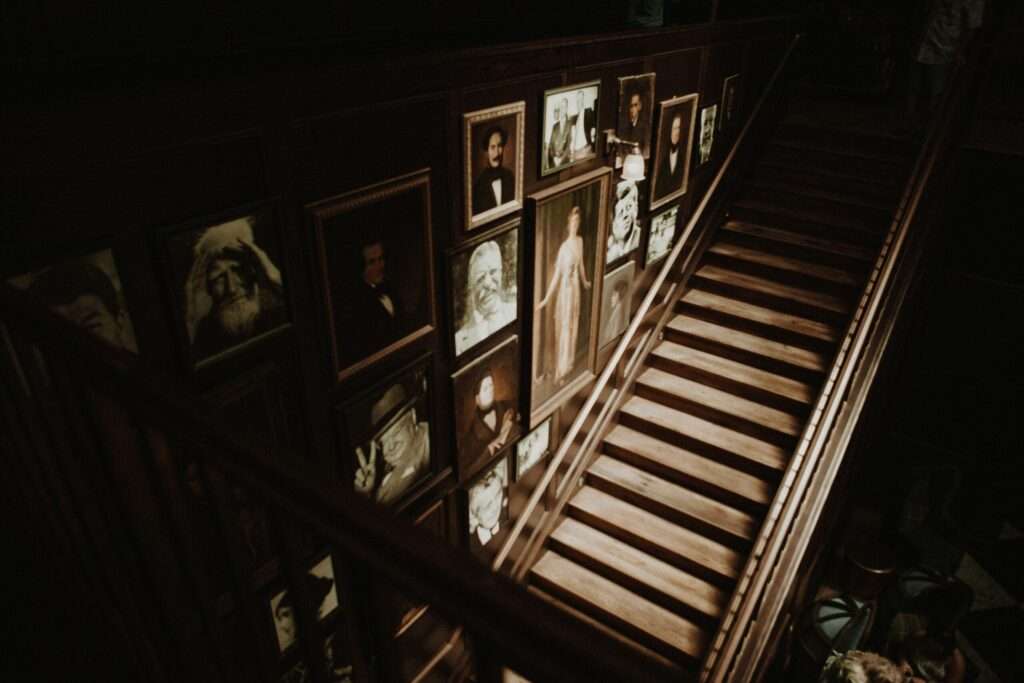
Do you know what your great-great-grandparents went through?
You should, because you might still be experiencing the repercussions from it.
We see this often in our work with constellations. Emotions are passed down generations and they continue to influence the behaviour and choices of the future generations. When we become aware of it, we can start the process of dis-identification and therefore free ourselves to go our own way.
If you feel overwhelmed in a way you can’t possibly explain rationally, if you recreate the same patterns which have been present in your family for ages, then you can be sure there is an entanglement waiting to be solved. In these cases, constellations are incredibly effective.
How have constellations evolved?
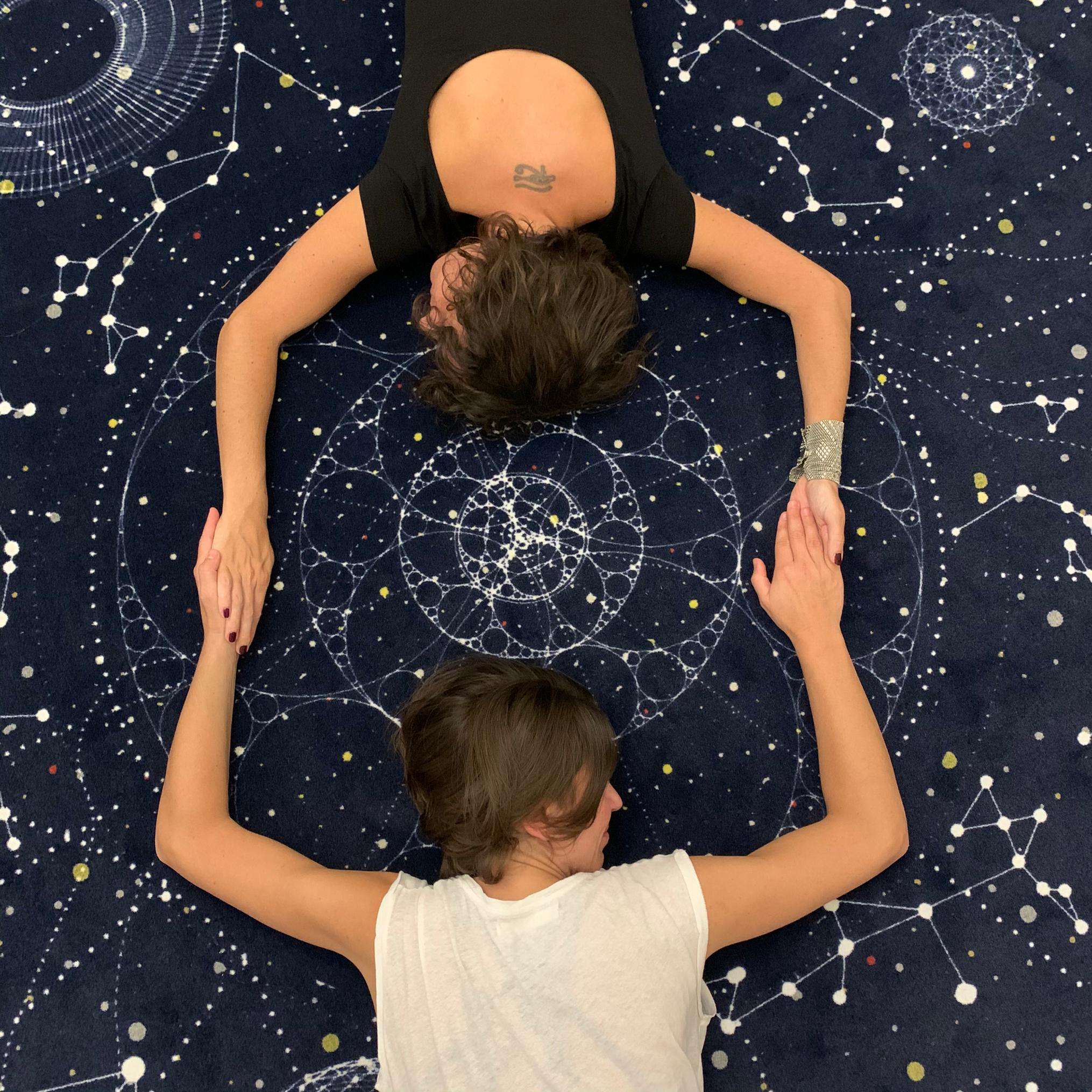
In a group setting any participant can be chosen as a representative.
In the classical method the individual settings works with objects instead of representatives. These days, the private setting structure is evolving. This is a method we have learned from our teachers at Città della Luce, and it is specific to the way we work at SPARK. Instead of using objects, we ask two experienced representatives to be present. They stay outside the room for the entire interview with the client, so they don’t hear the topic to be investigated. Then we call them in to represent the necessary roles.
Many clients who had worked previously in an individual setting using objects were enthusiastic about the possibility to work privately and still have the opportunity to see the constellation through human representatives.
Organisational constellations
A wealth of variants has sprung from the original format. Among them are organisational constellations. Gunthard Weber, our teacher Claude Rossellet and others developed a format which could be applied in business settings. For obvious reasons, CEOs are not that keen on having personal issues and emotional catharsis erupt in the middle of their work places.
Organisational constellations offer a unique way to look at the structure of organisations, at their vision and purpose, their current needs. You gain a wealth of information from it, without entering the personal realm.
What should you pay attention to?
In any personal development technique, the key to success is trust in the facilitator and the setting in which the constellation takes place. You need to feel supported and safe in order to be able to open up and let the constellation work.
This happens when you choose a trained professional facilitator who knows how to hold space and guide you through the work. The people training at SPARK to become facilitators in family and organisational constellations work with us for two years, getting more than 400 hours of training. Every year we do more than 150 hours of work on ourselves to make sure we are clear about our own shadows. Only then can we avoid projecting those on the people we work with.
Unless you are working with a trained therapist, psychologist or medical doctor, we advise not to do a constellation in cases of psychological instability. Constellations may be unsettling and it’s important you are in a space where you can grasp what is happening and also integrate the work. If you are uncertain, simply reach out beforehand for a consultation, and the facilitator will support you in your decisional process.
Finally, we don’t use constellations as oracles. If someone wants to find out whether their grandmother had an affair or whether they should play the lottery next week, we kindly refer them elsewhere.
It is very important for us to support the independence and autonomy of the people we work with. We avoid delegating to constellations the choices we should take. Constellations give you information, they show you a new perspective on things. From there on it’s up to you to actually act.
Why do we love this method?
Because it is efficient and effective. It shows us the entanglement of history with our stories. It takes us back in time in order to be more focused in our present.
Because you know how it starts, not how it finishes. It surprises you with infinite wisdom.
But mostly because
“Constellations show us our shared humanity“
When we work in a group we become aware of everything we share. Instead of focusing on what makes us different we discover our common vulnerabilities, challenges and dreams. In current times, to be reminded of our shared journey is definitely a most precious gift.
One we wish to share far and wide.
HamSa Serena Olgiati, July 2025, part 2 of 2
Share this post
- The 2013 article: Weinhold, J., Hunger, C., Bornhäuser, A., & Schweitzer, J. (2013). Effectiveness of systemic constellations: Exploratory results of the Heidelberg RCT study. Family Dynamics, 38(1), 42-51. The German title is: Wirksamkeit von Systemaufstellungen: Explorative Ergebnisse der Heidelberger RCT-Studie. The original journal page is available here: https://elibrary.klett-cotta.de/article/99.120115/fd-38-1-42 ↩︎
- See the work by Prof. Mansuy at the ETH in Zurich. Among others: Epigenetics and the Human Brain: Where Nurture Meets Nature (Mansuy, 2011, University of Zurich/HIFO). ↩︎
- See for example:
Scientific American (overview): https://www.scientificamerican.com/article/how-parents-rsquo-trauma-leaves-biological-traces-in-children/
Nature (Polish WWII trauma): https://www.nature.com/articles/s41598-023-44300-6
PubMed/PMC (Holocaust/war trauma transmission): https://pmc.ncbi.nlm.nih.gov/articles/PMC6127768 and https://pmc.ncbi.nlm.nih.gov/articles/PMC10910933/
Max Planck/DZPG summary (Binder & Yehuda’s work): https://www.psych.mpg.de/2950074/80-years-after-the-war ↩︎
2 responses to “The Power of our Roots | Part 2”
-
Looking for a chill bingo room without all the noise I joined this community and it has been a blast. The tournaments run smoothly and the prize pools are surprisingly generous. I really enjoy how community focused this place feels. bingovirtualcomfandi
-
Finally a site that actually delivers on its promises. The free spins package was easy to claim and I scored a decent win on my first day. Everything works perfectly on my phone and the checkout process takes just a few clicks. aumetaspins


Leave a Reply