


About Family Constellations
“This is much more than a method, it’s a life attitude: I learned to say yes to life“
For over eight years we have been exploring the art of family constellations. Yet the challenge remains: how do you explain something that mostly speaks the language of perceptions and sensations?
This is our attempt at it. If it leaves you with more questions than answers, there is only one thing to do: experience it personally.
What are family constellations?

For us they are an effective tool to investigate the deep, hidden causes of a situation.
We can think of a symptom (physical, emotional, situational – like a challenging relationship; anything symptomatic) as the tip of the iceberg. It is what we know and can perceive consciously. The constellation takes us to the hidden side of the situation; it shows us its deep rooted causes.
Constellations help us to investigate and release hampering blockages in order to be more present, focused and at peace with ourselves and the world around us.
Who wouldn’t want that?
We like to think of family constellations as a form of art. Each constellation is a unique manifestation of the inner world of a person. No two constellations are the same. Not even if two siblings investigate their relationship with their parents. Same parents, right? Biologically yes, otherwise not really.
A constellation focuses on relationships, on the connection between different elements of a family. In a constellation, the same biological parents will move and act in sometimes diametrically opposed ways, depending on the sibling looking at them. How you experience your parents may be very different from how your siblings experience them.
Where do constellations come from?
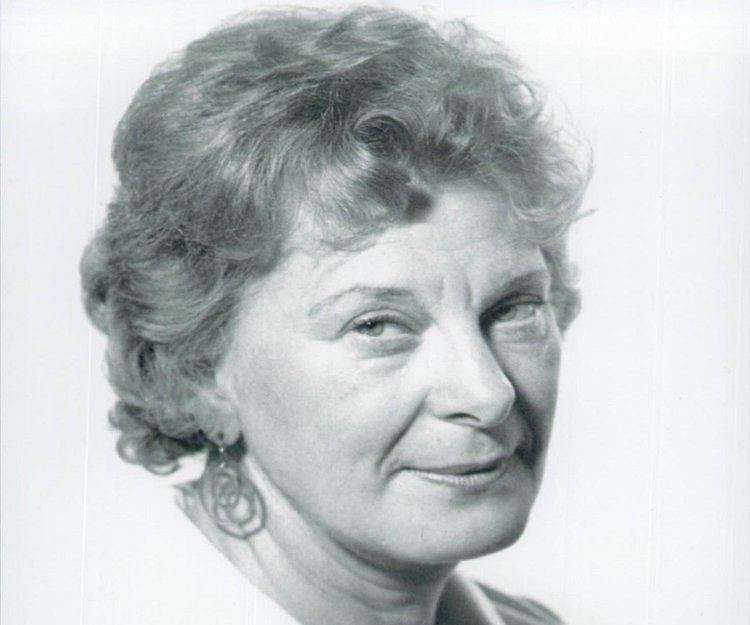
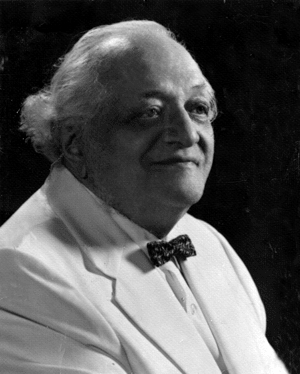
Family constellations are rooted in psychodrama (Jacob Moreno), family reconstruction and family sculptures (Virginia Sattir), and in the world of systemic theories, to cite just a few of the main influences.
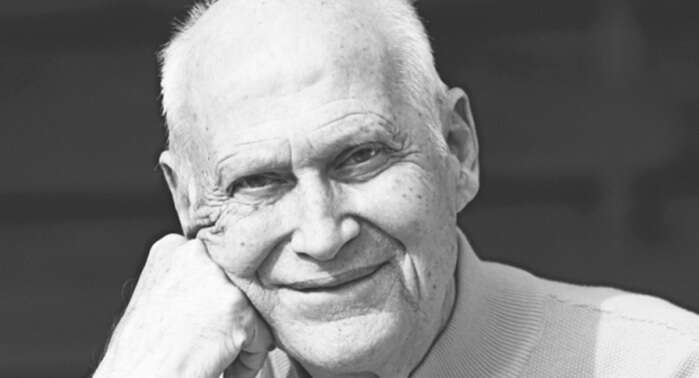
Bert Hellinger is the ‘father’ of this method. He didn’t invent it but was rather inspired by the tools mentioned above and from these developed what we know today as family constellations. He was the one to make them known and define their key elements.
Are family constellations only about family issues?
And no, we do not work on changing our parents. On pointing fingers and blaming others for the way we feel. We work on ourselves, on what we can do to choose another ending to the story. One that supports us, instead of draining our energy.
Why would I do a constellation?
Before we get to how constellations work, let us focus on the issues you can investigate by them. We can summarise them in three categories:
Me – anything that has to do with your relationship with yourself, e.g. low self-esteem, your relationship to food, to your body, your physical or emotional health. But also your relationship with your family of origin, your parents, dead siblings (dead and alive), grand-parents and ancestors. It doesn’t matter whether you have met these ancestors or whether they are still alive. The entanglement remains and often has origins far older than oneself. More on this below.
You – sexuality, abuses, relationship to current and ex partners, children, abortions and miscarriages. Anything that has to do with the relationship to your family of choice. The family you have chosen and created as an adult. No matter the form it takes, whether you have children and whether it is with one or more partners. We also look at potential issues preventing you from being in a relationship.
Organisations – work issues, such as your relationship to money, self-realisation and success, autonomy and independence, as well as challenges with work colleagues. We investigate what current projects need, or the structural changes we can introduce to support our business.
Some examples of topics we have recently investigated are:
- My partner does not give me enough attention. I don’t feel seen and recognised.
- I really would like to have children but nor do I have a partner nor am I capable of being in a relationship for more than a few months.
- I have a very tense relationship with my mother; we love each other but I have the feeling there is an invisible wall between us.
- I have a very low self-esteem and I don’t trust myself. I have tried to solve this but it doesn’t seem to get better.
- I have a dream project but I am scared to leave my current job and pursue it.
- I want to investigate my challenges with success and self-realisation.
- I have been suffering from hypothyroidism for years, and so have my mother and her mother. I would like to investigate this symptom.
Constellations bring to the surface a new perspective, an alternative way of looking at a challenge. They show you the other side of the medal, the one you can’t access easily by yourself.
When we navigate into the depth of ourselves, we can’t use our rational mind, we need to train and learn to work with our empathic, emotional intelligence and perceive with our emotions. It can be scary, it definitely is unknown territory. This is why the role of the facilitator is to hold a safe protected space for the client to be able to relax and open up to what manifests in front of them.
How does it work?
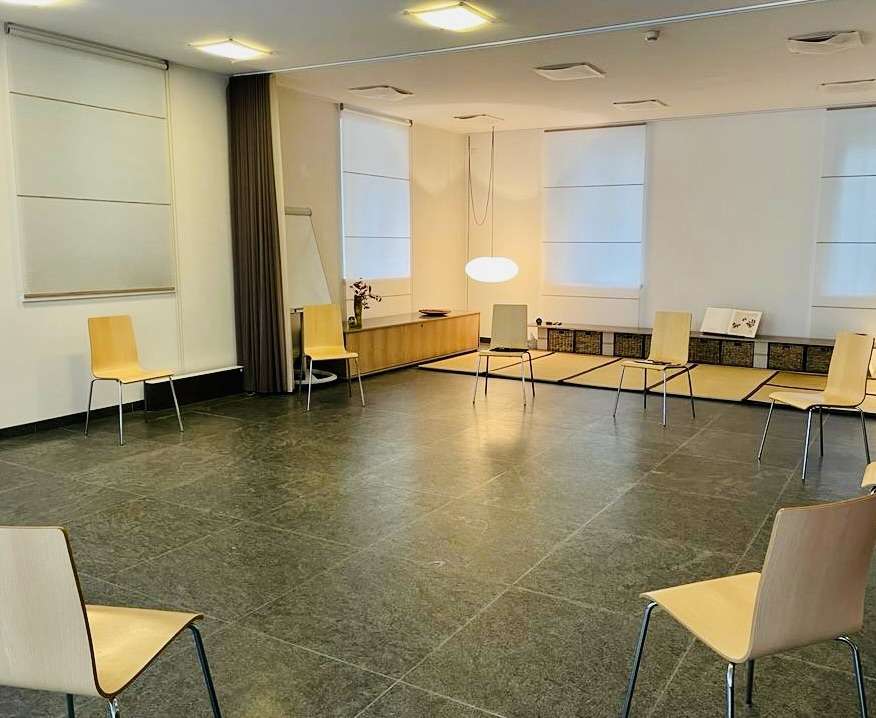
It can also be done privately, in a 1 to 1 setting.
In both settings, the constellation starts with a preliminary conversation in which the client and the facilitator determine the topic to be investigated. A basic family tree of the client is then drawn. The focus on the family tree is specific to the way we work at SPARK. Simply starting to collect information about our ancestors raises a wealth of information. This can be very supportive for the work.
Once the topic has been clarified, the client chooses a representative. The representative starts moving freely around the room. They may stand or lie down, feel physical pain or emotions. They might be in the center of the space or hiding in a corner.
This gives a first picture of the position of the client related to the topic they wish to investigate. From there we call in other representatives, who will do the required roles (mother, father, physical symptom, siblings, partners, children, work colleagues etc.).
Is it like acting in a theatre play?
A scene starts to manifest. This is not too far away from what we witness in a theatre. With an important difference: representatives are not actors acting out a role. Representatives immerse themselves into the role. They become it. They feel, move and even take on the same positions as family members of the client. One of our client told us:
“Suddenly this perfectly unknown stranger stands up and starts moving like my grandmother, using the same words, and even taking on the same characteristic body position.”
It’s not magic; scientifically the phenomenon is called ‘repräsentierende Wahrnehmung’ (representing perception). It has been studied empirically. No hocus-pocus, rather a good amount of training.
How can anyone represent someone else without bringing their own personal story into it?
This is a very relevant question we are often asked. It is the role of a professional facilitator to be alert to the representatives and make sure they leave their personal story outside.
At SPARK we work with people who have many hours of training as representatives. The more you are used to move in and out of the required roles, the less danger there is to be overwhelmed by your personal story.
What will come from it?
With time the entanglement becomes apparent. The client sees clearly, in 3D and with no filters, the blockage they have been carrying within themselves. It is an incredibly liberating moment. By witnessing it in front of their eyes, they have the unique opportunity to dis-identify from it. The blockage raises into conscious awareness. It moves from the invisible, untouchable realm, into the reality in front of us.
To release and transform the blockage the facilitator offers a series of sentences the client repeats to the relevant representatives. Through this resolutive movement, a new scene develops. There is relief, more energy, peace and a new awareness for the situation and the people involved. This is when the constellation can be closed. Facilitator and client identify together the relevant points to take home.
When a constellation starts, the facilitator doesn’t know what the final solution will look like. Their role is to hold space, guide the client throughout the process and pay careful attention to what the client expresses, and to what manifests spontaneously through the representatives in the field.
HamSa Serena Olgiati, July 2025, part 1 of 2
In the next section of this post:
- How can constellations support you?
- Epigenetics and family constellations
- Transgenerational Trauma
- The evolution of family constellations
- Organisational Constellations
Share this post
2 responses to “The Power of our Roots | Part 1”
-
What a refreshing change from all the cluttered gambling sites out there. The dashboard is clean and I never have to dig through hidden menus to find what I need. Withdrawals hit my account faster than I expected and the promotions feel fair instead of tricky. Will definitely keep coming back. bdcv777
-
The live dealer tables here run without any lag and the dealers are professional yet approachable. I really appreciate how the platform highlights game statistics so players can make informed decisions before placing their wagers. Withdrawals are processed quickly and the verification step is completely digital which saves a lot of time. It is one of the most reliable sites I have used for real time casino action. crazytimelivecasino


Leave a Reply